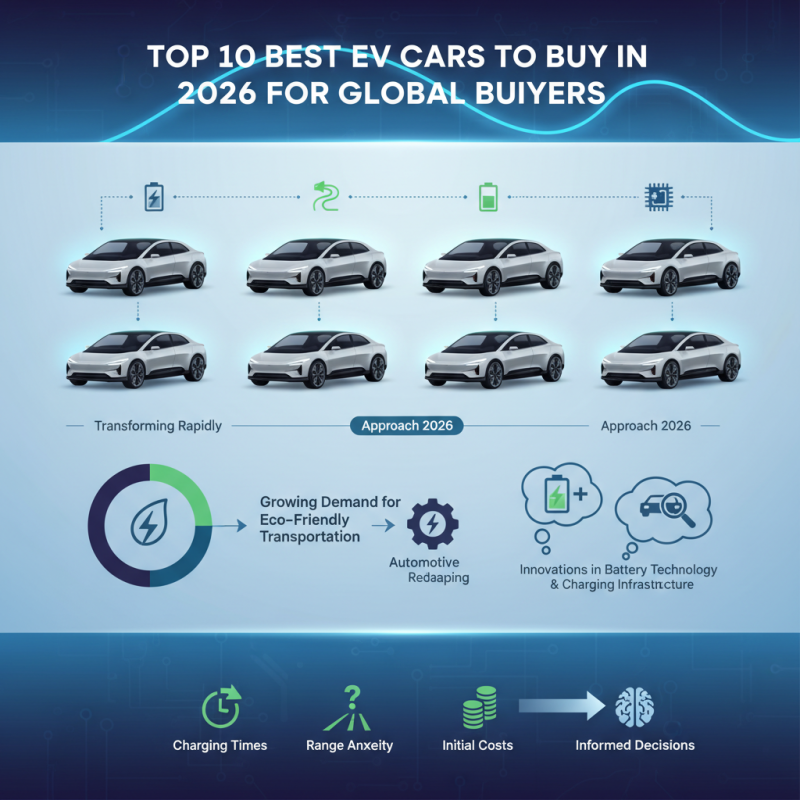
The electric vehicle (EV) market is transforming rapidly. As we approach 2026, buyers are keen to find the best EV cars that combine efficiency, range, and technology. With numerous options on the horizon, consumers must navigate various features and pricing strategies. The growing demand for eco-friendly transportation is reshaping the automotive industry.
Electric vehicles are not just a trend; they are the future of mobility. Major automakers are investing heavily in research and development. This includes innovations in battery technology and charging infrastructure. All this progress makes it essential for buyers to remain informed about upcoming models that promise to deliver more value.
However, the landscape is not without challenges. New models may have limitations that require careful consideration. Factors like charging times, range anxiety, and initial costs can impact our decisions. Understanding these elements can lead to better choices for prospective EV owners. In this guide, we will explore the top 10 best EV cars for global buyers in 2026, providing insights rooted in expert analysis and market trends.
Overview of the EV Market Trends Leading to 2026
The electric vehicle (EV) market is evolving rapidly. By 2026, several trends are influencing buyers globally. First, government policies are becoming more supportive. Many countries are pushing for stricter emissions regulations. This, in turn, boosts EV adoption. Consumers now view EVs as viable options for daily commutes.
In addition, battery technology is improving. New advancements extend the range of EVs. Longer range means less anxiety for buyers. However, charging infrastructure still needs improvement. Many regions lack adequate charging stations. This remains a significant barrier for potential buyers.
Furthermore, sustainability is at the forefront of customer priorities. Many consumers are increasingly aware of their carbon footprints. They prefer vehicles that align with their values. Yet, there is still confusion about recycling old batteries. This issue needs to be addressed moving forward. Understanding these dynamics will be crucial as the market grows.
Key Factors Influencing EV Car Choices for Global Buyers
As global buyers consider electric vehicles (EVs), several factors drive their decisions.
Range, charging infrastructure, and price stand out as primary considerations. Data from the International Energy Agency
indicates that by 2026, two-thirds of potential buyers will prioritize range. Many fear getting stranded without
charging options. Therefore, manufacturers must ensure competitive mileage in their designs.
Charging availability is another critical factor. A report from McKinsey
highlights that 70% of consumers prefer home charging solutions. However, urban areas often lack
adequate infrastructure. Buyers express concerns over finding public chargers.
Therefore, investments in charging stations are essential for future EV adoption.
Price and incentives significantly influence purchasing behavior. Research shows that around 60% of consumers
expect EVs to be on par with traditional vehicles by 2026. However, many remain hesitant due to
initial costs. Government incentives can ease these worries.
Yet, the inconsistency of subsidies raises doubts for buyers. Clarity on long-term policies is crucial
for building trust in the EV market.
Top 10 Electric Vehicles: Features and Specifications
As the popularity of electric vehicles (EVs) surges, 2026 promises exciting offerings for global buyers. Industry experts predict that the market will grow at a compound annual growth rate (CAGR) of over 20% in the coming years. Sustainability and technology are becoming crucial factors in vehicle selection. Data from several market reports indicate that range, charging efficiency, and design will be paramount features for buyers.
In 2026, consumers can expect vehicles with impressive features. Many models will boast ranges exceeding 300 miles on a single charge. Charging times are also shrinking, with advancements suggesting that rapid charging could take as little as 15 minutes. The integration of connected car technologies will enhance the driving experience, enabling features like over-the-air updates and advanced safety systems. One report highlights that nearly 60% of buyers prioritize smart technology in their purchasing decisions.
Despite advancements, challenges remain. Battery production raises environmental concerns, and recycling capabilities are still in their infancy. Hybrid options are emerging as transitional solutions, but consumer reluctance persists. Understanding these nuances is essential for informed decisions. Buyers must consider both the benefits and the limitations as they navigate the evolving electric landscape.
Comparative Analysis of Pricing for Leading EV Models
The electric vehicle (EV) market is rapidly evolving, with significant variations in pricing among leading models. According to a recent report from the International Energy Agency, the cost of EV batteries has decreased by over 80% since 2010, impacting overall vehicle prices. By 2026, average prices for mainstream EVs are expected to fall below $30,000. This shift will broaden accessibility for global buyers, making EV adoption more feasible.
However, regional differences in pricing persist. For instance, in North America, manufacturers may face higher production costs due to tariffs and supply chain challenges. Meanwhile, European markets benefit from governmental incentives, which can reduce the final purchase price significantly. Buyers in countries promoting EV adoption may see prices 10-15% lower than in regions without such support.
Consumers should also consider additional costs like home charging setups and maintenance. Some reports suggest that while the initial price may be lower in certain models, the long-term savings on fuel and upkeep can vary greatly. Not every model will offer the same value over time. Reflecting on these factors is crucial for informed decision-making as the market continues to evolve.
Sustainability and Environmental Impact of 2026 EV Options
As we look ahead to 2026, the demand for electric vehicles (EVs) continues to grow. This shift represents a crucial step towards sustainability. Consumers are increasingly aware of their carbon footprints. EVs offer a cleaner alternative to traditional vehicles, but the environmental impact varies significantly.
Each model's production process can affect its overall sustainability. The extraction of materials for batteries raises ethical concerns. Unless responsibly sourced, these materials can cause damage to ecosystems. Recycling processes for batteries also need improvement. Many buyers may overlook these factors when choosing an EV.
Charging infrastructure plays a critical role too. In many regions, the availability of charging stations remains limited. This can lead to ‘range anxiety’ among potential buyers. For a truly sustainable experience, the grid must also rely on renewable energy sources. The connection between EVs and overall energy consumption requires ongoing examination. Balancing convenience with environmental integrity remains a challenge.
FAQS
: Government policies and improved battery technology are key trends. They support EV adoption and extend vehicle ranges.
Battery costs have dropped significantly, over 80% since 2010. This has made electric vehicles more affordable for consumers.
Charging infrastructure is still lacking in many areas. This poses a barrier and creates ‘range anxiety’ among potential buyers.
Many consumers want vehicles that lower their carbon footprint. However, the environmental impact of materials used in batteries is often overlooked.
Yes, by 2026, average prices for mainstream EVs could drop below $30,000, making them more accessible to buyers.
Absolutely. Additional costs like home charging setups and long-term maintenance significantly affect overall ownership costs.
Pricing can vary by region due to factors like tariffs and governmental incentives. This impacts affordability and access for consumers.
Many consumers are confused about battery recycling. Improving these processes is essential for sustainable electric vehicle use.
Limited charging stations can deter buyers. Adequate infrastructure is crucial for easing concerns about EV range.
To achieve true sustainability, charging grids need to rely on renewable energy sources. Balancing this is a continuous challenge.
Conclusion
The electric vehicle (EV) market is evolving rapidly, with trends indicating significant growth leading up to 2026. Key factors influencing global buyers include technological advancements, charging infrastructure improvements, and the increasing importance of sustainability in consumer choices. As buyers become more environmentally conscious, the demand for EV cars is expected to rise, driven by both performance features and overall value.
In examining the top 10 EV cars available for purchase in 2026, aspects such as innovative designs, cutting-edge specifications, and competitive pricing are crucial. A comparative analysis reveals how different models cater to diverse consumer needs while prioritizing sustainability and reducing environmental impact. Ultimately, the future of EV cars lies in their ability to offer an appealing blend of technology, affordability, and eco-friendliness, making them a top choice for buyers worldwide.
 Worlink
