
Worlink
Sedan Electric Cars combine the familiar shape of a four-door vehicle with a battery-powered drivetrain. They use electricity instead of gasoline to turn the wheels. A large battery pack stores energy beneath the cabin or floor. An electric motor then converts that energy into motion. The process is quieter and mechanically simpler than a traditional engine system.
This guide explains how these cars work in practical terms. It follows electricity from a home charger or public station to the battery, inverter, motor, and wheels. Drivers may notice instant acceleration when leaving a traffic light. They may also feel regenerative braking when the car slows and returns some energy to the battery. The experience can feel smooth, but it is not completely effortless. Charging time, weather, battery size, and driving speed all influence daily use.
Technical specifications deserve careful reading. A larger battery may extend driving range, but it can also increase vehicle weight and purchase cost. Fast charging can save time, although charging speed changes as the battery fills. Cold temperatures may reduce range temporarily. These details matter more than impressive advertising figures. Real-world results depend on traffic, heating, air conditioning, tire pressure, and driving habits.
The sections ahead will examine battery chemistry, motor operation, charging methods, safety systems, maintenance, and ownership costs. They will also compare electric sedans with hybrid and gasoline alternatives. Some explanations may simplify complex engineering. That is worth acknowledging. A clear overview helps readers ask better questions before choosing a vehicle or planning a charging routine.
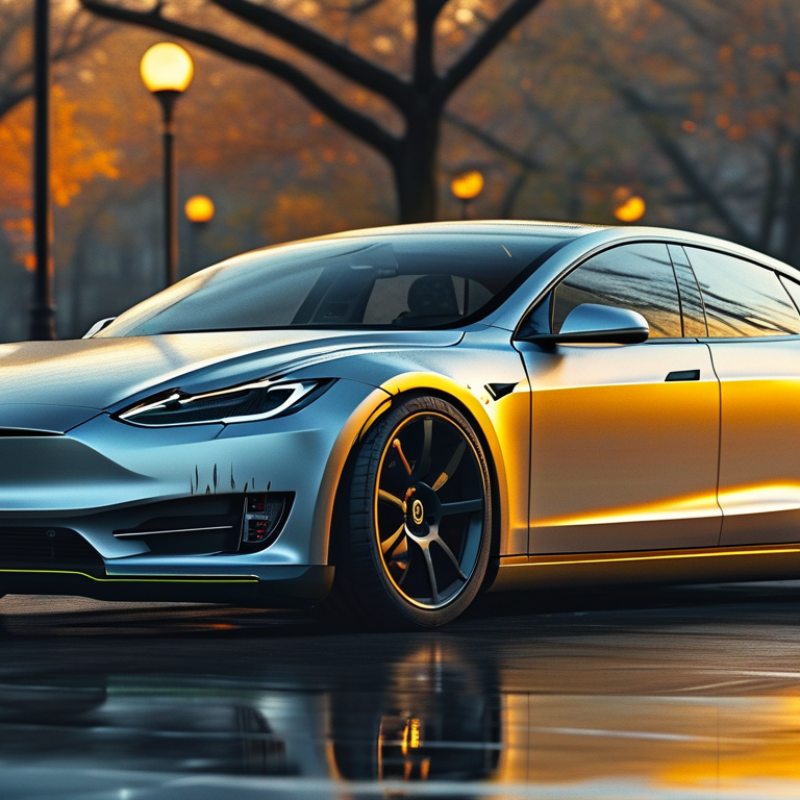
Sedan electric cars are four-door vehicles powered mainly by rechargeable batteries. They have no gasoline engine, fuel tank, or tailpipe emissions during driving.
In 2023, global electric car sales reached roughly 13.6 million units. That figure includes several body styles, not sedans alone. This distinction matters because public data rarely separates electric sedans from crossovers and hatchbacks.
A sedan EV stores energy in a large lithium-ion battery pack beneath the floor. The battery sends direct current to an inverter, which supplies power to one or more electric motors. The motors turn the wheels almost instantly, creating smooth acceleration and quiet movement.
Regenerative braking reverses part of that process. During deceleration, the motor recovers energy and returns it to the battery.
Charging speed depends on battery size, charger output, temperature, and the vehicle’s charging system. Home charging may suit overnight routines, while rapid charging can add useful range during longer journeys.
Real-world range still changes with speed, weather, traffic, and heating use. The low center of gravity can improve stability, but battery weight may increase tire wear.
The category also feels less tidy than its marketing suggests. Some electric sedans are efficient commuters, yet others consume substantial energy because of power and weight. Buyers should examine tested efficiency, charging performance, warranty terms, and daily driving patterns rather than relying on range claims alone.
An electric sedan stores energy in a high-voltage battery pack beneath the floor. Thousands of cells feed direct current to an inverter, which controls power sent to the motor. The motor then turns the wheels through a compact reduction gear. The process is quiet, but not simple.
Most sedans use 400-volt systems, while advanced platforms may use 800 volts. At the same charging power, higher voltage allows lower current and thinner cables. It can also reduce heat during fast charging. The International Energy Agency reported nearly 14 million electric car sales worldwide in 2023, increasing pressure for faster, more efficient charging systems. Numbers need context. Charging speed still depends on battery temperature, state of charge, and station capacity.
Battery cost remains central to the design. BloombergNEF’s 2023 Battery Price Survey placed the average lithium-ion pack price at 139 dollars per kilowatt-hour. Lower costs help, but a larger pack adds mass. That extra weight can increase energy use on highways. Regenerative braking sends some wheel energy back through the motor and inverter, yet recovery is never perfect. The U.S. Department of Energy estimates battery-electric vehicles convert about 77–82% of grid energy into movement, compared with roughly 12–30% for conventional vehicles. These figures are useful, though real-world driving, winter temperatures, and tire pressure can alter them noticeably.
A sedan electric car moves by turning stored electrical energy into wheel motion. Its high-voltage battery stores direct current (DC). An inverter changes that power into controlled alternating current for the motor. The motor sends torque through a simple reduction gear. No multi-speed gearbox is usually needed. In practice, the energy path feels smooth and quiet, especially during gentle acceleration.
An efficiency figure of 15–20 kWh/100 km describes energy use over 100 kilometers. The car uses 15 to 20 kilowatt-hours under stated conditions. A 60 kWh battery could therefore provide about 300–400 kilometers in ideal arithmetic. Real driving is less tidy. Cold weather, highway speed, hills, heavy cargo, and cabin heating increase demand. Regenerative braking recovers some motion energy when the driver lifts off or brakes, but it cannot return everything. The estimate helps, yet it is never exact. I would treat it as a planning range, not a promise.
Tips: Check dashboard consumption after a full trip, not one short journey. Keep tires correctly inflated and use gentle acceleration. Preheating while plugged in can preserve battery energy in winter. Watch highway speed; air resistance rises quickly. Leave a reserve for traffic and weather. Small habits matter. Driving style still varies.
| Energy Flow Stage | What Happens | Typical Energy or Power Value | Main Factors Affecting the Value |
|---|---|---|---|
| Grid to Charging System | Alternating-current electricity from the grid is converted and supplied to the vehicle. | 3.7–11 kW AC | Charging equipment, household wiring, circuit capacity, and the vehicle's onboard charger. |
| Charging Losses | Some energy is lost as heat during AC-to-DC conversion, battery charging, and cable transmission. | Approximately 8–15% | Battery temperature, charging power, cable length, charger efficiency, and battery state of charge. |
| Battery Storage | A high-voltage lithium-ion battery stores electrical energy as direct current. | 50–90 kWh usable capacity | Vehicle size, battery chemistry, thermal management, driving range, and available reserve capacity. |
| Battery Management | The battery management system monitors cell voltage, temperature, current, and state of charge. | High-voltage system, commonly 300–450 V | Cell design, cooling performance, protection limits, and battery operating conditions. |
| DC to AC Inverter | The inverter changes battery direct current into controlled alternating current for the traction motor. | 50–200 kW peak motor input | Acceleration demand, motor design, battery power limits, software control, and thermal conditions. |
| Electric Motor | Electromagnetic forces convert electrical energy into rotational force at the wheels. | Approximately 85–95% efficiency | Motor speed, torque demand, winding resistance, bearing friction, and cooling. |
| Drivetrain to Wheels | A single-speed reduction gear transfers motor torque to the driven wheels. | Approximately 95–98% efficiency | Gear friction, lubricant temperature, tire pressure, wheel alignment, and road surface. |
| Energy Used for Motion | The wheels use energy to overcome air resistance, rolling resistance, road gradients, and vehicle inertia. | About 15–20 kWh/100 km | Speed, weather, traffic, vehicle mass, aerodynamics, tire type, terrain, and climate-control use. |
| Regenerative Braking | During deceleration, the motor operates as a generator and sends part of the vehicle's kinetic energy back to the battery. | Approximately 10–30% recovery in mixed driving | Traffic density, driving style, road gradients, battery state of charge, and battery temperature. |
| Auxiliary Electrical Loads | Electrical systems such as heating, air conditioning, lighting, displays, pumps, and battery cooling consume energy. | Roughly 0.5–3 kWh/100 km | Outside temperature, cabin temperature setting, trip length, lighting use, and preconditioning. |
| Typical Driving Range | Estimated distance depends on usable battery energy divided by real-world consumption. | Approximately 250–550 km | Usable battery capacity, average speed, climate, terrain, payload, and driving conditions. |
A sedan electric car uses a high-voltage battery to power one or more electric motors. An inverter converts battery electricity into controlled motor power. Pressing the accelerator changes the motor’s speed almost instantly. During braking, the motor can work as a generator and return some energy to the battery.
Charging speed needs careful explanation. A DC fast charger sends direct current to the battery, avoiding the car’s slower onboard AC converter. Under suitable conditions, many electric sedans can charge from 10% to 80% in about 18–30 minutes. This range depends on charger output, battery size, temperature, and the vehicle’s charging curve. The final 20% usually takes longer. That is normal.
Battery temperature matters. A cold pack may limit power until it warms up. A very hot pack may also reduce charging speed. Drivers can improve consistency by using the car’s battery-preconditioning setting before arriving at a fast charger. Keep the battery below 10% only when necessary. It leaves less room for delays.
Charging is not always linear. The display may show impressive power briefly, then reduce it near 60% or 80%. I used to view the 10–80% figure as a fixed promise, but real trips are less tidy. Weather, traffic, and shared charger demand can change the result. Check the vehicle manual and charger rating before planning a tight schedule. Safety depends on certified equipment and undamaged cables.
Estimated time to charge a typical electric sedan from 10% to 80%
DC fast charging can typically raise an electric sedan's battery from 10% to 80% in about 18–30 minutes when the vehicle and charger support high power levels. Charging time depends on battery size, charger output, battery temperature, and the charging curve. AC Level 2 charging is slower but is commonly used at home or work.
What Are Sedan Electric Cars and How Do They Work?
Electric sedans use a battery, electric motor, inverter, and control software instead of a combustion engine. Regenerative braking is central to their efficiency. When the driver lifts the accelerator, the motor reverses its role and becomes a generator. The sedan slows, while kinetic energy flows back into the battery. This energy would otherwise become heat through friction brakes.
The U.S. Department of Energy’s Alternative Fuels Data Center explains that regenerative braking can recover energy normally lost during deceleration. The 2024 Fuel Economy Guide from the U.S. Environmental Protection Agency also identifies regenerative braking as an important efficiency feature in electric vehicles. Recovery is not constant. A gentle slowdown may return useful energy, while a sudden stop still depends heavily on friction brakes. Battery temperature, speed, road slope, and charge level also change the result.
Some drivers feel a noticeable pull when releasing the accelerator. Others find it unfamiliar at first. That hesitation is reasonable. Regeneration cannot create energy, and it cannot recover every joule used to move the car. Energy losses occur in the motor, electronics, tires, and battery. The International Energy Agency reported more than 14 million electric cars were sold globally in 2023, making these small efficiency gains increasingly significant. Still, real-world performance depends on driving habits. Smooth urban traffic usually offers more recovery opportunities than steady highway cruising.
: It is a four-door car powered mainly by a rechargeable battery. It has no gasoline engine, fuel tank, or tailpipe emissions while driving. The battery usually sits beneath the cabin floor. Quiet travel is typical.
The battery sends direct current to an inverter. The inverter controls power for one or more electric motors. The motor turns the wheels through a simple reduction gear. Acceleration feels smooth and immediate.
Many electric sedans use about 15–20 kWh per 100 kilometers. A 60 kWh battery could suggest 300–400 kilometers in ideal conditions. That arithmetic is not a promise. Cold weather, hills, cargo, and heating increase energy use.
Highway speed can reduce range because air resistance rises quickly. Winter temperatures may reduce battery performance and cabin efficiency. Traffic, tire pressure, road slopes, and driving style also matter. Leave some reserve.
During deceleration, the electric motor can act as a generator. It sends part of the car’s motion energy back into the battery. This reduces energy normally lost as brake heat. It cannot recover everything.
Not always. Battery temperature, speed, slope, and charge level affect recovery. Gentle slowing may return useful energy. Sudden stops still rely more on friction brakes. Energy losses remain in the motor, electronics, tires, and battery.
Home charging may fit an overnight routine. Rapid charging can add useful range during longer trips. Charging speed depends on battery size, charger output, temperature, and vehicle hardware. Planning still needs patience.
Keep tires correctly inflated and accelerate gently. Preheat the cabin while the car remains plugged in during winter. Check consumption after a complete trip, not one short drive. Moderate highway speeds help.
Compare tested efficiency, charging performance, battery warranty, and daily driving needs. Look beyond advertised range figures. Battery weight may increase tire wear. Some powerful sedans consume substantial energy. The category is less tidy than it appears.
Sedan Electric Cars are battery-powered vehicles designed in the traditional four-door sedan format, combining a low, streamlined body with an electric powertrain. In a market that reached approximately 13.6 million electric units in 2023, these cars use large battery packs to store energy, inverters to manage electrical current, and one or more motors to turn that energy into motion. Depending on the vehicle, the system may operate at a 400- to 800-volt level, supporting strong performance and faster charging.
Energy use is commonly measured at around 15–20 kWh per 100 kilometers, although driving conditions and vehicle design affect actual results. During charging, DC fast-charging systems may raise the battery from 10% to 80% in roughly 18–30 minutes under suitable conditions. Regenerative braking also improves efficiency by converting some motion energy into electricity during deceleration and sending it back to the battery.
