
Worlink
Electric Cars are no longer a niche purchase reserved for technology enthusiasts. They now shape household budgets, city planning, and global supply chains. The International Energy Agency’s Global EV Outlook 2024 reported nearly 14 million electric car sales worldwide in 2023. Electric vehicles represented about one in five new cars sold.
That growth sounds simple. It is not.
A car that performs well in Oslo may struggle in Nairobi’s heat, or during a winter trip across Canada. Charging access, electricity prices, battery warranties, repair networks, taxes, and resale values differ sharply between markets. BloombergNEF’s Electric Vehicle Outlook 2024 also highlighted falling battery costs, but prices remain uneven because materials, tariffs, and local manufacturing policies vary.
This guide, “10 Tips for Buying Electric Cars Worldwide,” turns those differences into practical questions. It considers driving range beyond laboratory figures, including air-conditioning use, steep roads, traffic, and cold weather. It also examines charging speed, connector standards, home installation, software support, and battery degradation.
Real ownership is often less polished than advertisements suggest. A fast charger may be occupied, unavailable, or incompatible. A promised range may shrink dramatically at highway speeds. These details matter more than a glossy dashboard.
The recommendations draw on international industry research, manufacturer specifications, and ownership realities. Readers should still verify local incentives, warranty terms, safety ratings, and service coverage before purchase. No global checklist can replace a careful test drive and honest cost calculation.
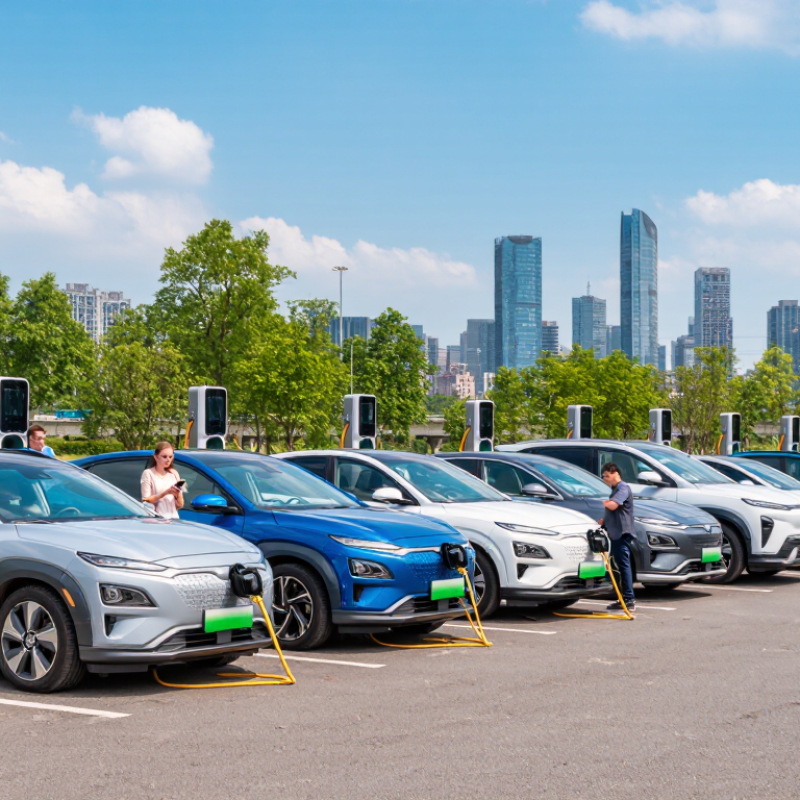
Before comparing electric cars, define how you actually drive. Record seven ordinary days: daily distance, highway time, passengers, cargo, and parking locations. A vehicle that travels 35 miles daily needs different capabilities from one used for 180-mile weekend journeys. The International Energy Agency’s Global EV Outlook 2024 reports nearly 14 million electric cars were sold worldwide in 2023, representing about 18% of new car sales. More choices do not make personal requirements less important.
Range estimates can mislead when weather, hills, speed, and heating are involved. In cold conditions, usable range may fall noticeably. Leave a practical buffer, perhaps 15% to 25%, for unexpected delays. Home charging changes the calculation. If your car sits overnight beside a suitable electrical connection, slow charging may be enough. Apartment residents should inspect local charging access, operating hours, payment methods, and queues. Public charging infrastructure is expanding: the IEA recorded more than four million public charging points globally in 2023.
Think beyond commuting. Can the car carry your family, tools, or a stroller? Does your route include steep roads or long rural gaps? A short test drive rarely answers these questions. Borrowing or renting an electric car for several days is better evidence, though still imperfect. My first estimate might ignore winter traffic or a forgotten weekly trip. That is exactly why a driving diary, charging receipts, and honest questions about parking matter before purchase.
Daily distance and driving conditions strongly influence battery size and charging needs. These representative, non-brand-specific energy-use benchmarks help compare common driving patterns.
Urban driving generally uses less energy than highway travel, while cold weather and heavy loads can increase consumption. Choose a battery and charging routine based on your regular habits rather than occasional long trips.
Buying an electric car worldwide requires more than reading its advertised range. Compare usable battery capacity, not only the total battery size. A quoted range can change with weather, speed, luggage, and heating. In cold climates, range may fall noticeably. I once planned a long trip using ideal figures, and the final stops felt stressful. Keep a practical reserve.
Tip 1: Test your regular route. Check winter performance, motorway range, and steep-road efficiency before choosing a vehicle. Independent road tests and official energy data provide stronger evidence than showroom claims.
Tip 2: Compare charging speeds carefully. A vehicle may accept rapid charging briefly, then slow down as the battery fills. Look for the typical time from 10% to 80%, not just the peak figure. Home charging can be slower but cheaper and more convenient overnight. Public connectors, payment systems, and electrical standards differ between countries, so confirm compatibility before travelling. Small details matter.
Tip 3: Match the vehicle type to your daily life. A compact car may use less energy in crowded cities. A larger utility vehicle offers more space but usually consumes more electricity. Sedans can perform well on highways, while vans suit frequent cargo work. Review seating, boot space, ground clearance, and towing limits. A short test drive may hide weaknesses. Try parking, loading bags, and entering the rear seats. Reliable ownership also depends on local service support, warranty terms, battery safety information, and access to qualified technicians.
| Tip | What to Compare | Useful Data Range or Benchmark | Why It Matters | Worldwide Buying Note |
|---|---|---|---|---|
| 1 | Real-world driving range | Approximately 150–550 km per full charge for many current passenger EVs, depending on battery size, vehicle design, speed, weather, and test method. | Advertised range is measured under controlled conditions. Highway driving, cold temperatures, heavy loads, and heating or air conditioning can reduce usable range. | Compare vehicles using the same testing standard where possible. WLTP, EPA, and other regional figures are not directly interchangeable. |
| 2 | Battery capacity and usable energy | Common passenger EV batteries are roughly 30–100 kWh. Usable capacity may be lower than the vehicle’s gross battery capacity. | A larger battery usually increases range but can add cost, weight, and charging time. Usable capacity is more relevant than the gross figure. | Ask whether the quoted capacity is gross or usable, and check how much capacity may be reserved to protect battery durability. |
| 3 | Energy efficiency | Many passenger EVs consume about 14–25 kWh per 100 km in mixed driving. Larger vehicles and high speeds generally use more. | Efficiency affects both driving range and running cost. A smaller battery in an efficient vehicle can outperform a larger battery in an inefficient one. | Use local electricity prices to estimate charging cost. Include charging losses, which commonly add about 10–20% to energy drawn from the grid. |
| 4 | AC charging speed | Home and public AC charging commonly operates at 3.7–22 kW. A 7.4 kW connection can add roughly 30–50 km of range per hour, depending on efficiency. | AC charging is usually convenient for overnight or workplace charging, but the car’s onboard charger may limit the actual rate. | Check household electrical capacity, local voltage, plug type, installation rules, and whether three-phase power is available. |
| 5 | DC fast-charging performance | Public DC chargers commonly provide 50–350 kW. Many vehicles reach their highest rate only for a limited part of the charging session. | Peak power alone does not determine charging time. The charging curve, battery temperature, state of charge, and charger output are equally important. | Compare the typical time from 10% to 80%, not only the maximum kW figure. Charging above 80% is usually slower. |
| 6 | Charging network access | Check the number of compatible public chargers, their reliability, payment options, opening hours, and average availability along regular routes. | A vehicle with long range may still be inconvenient if suitable chargers are scarce, busy, or incompatible with its connector. | Connector standards vary by region. Confirm compatibility with local AC and DC infrastructure before purchase, especially for cross-border travel. |
| 7 | Vehicle type and intended use | Small hatchback: efficient for cities. Sedan: often efficient for long trips. SUV: more space but commonly higher consumption. Van or pickup: useful for payloads but typically less efficient. | Vehicle shape, weight, tires, seating capacity, and cargo requirements can affect range more than battery size alone. | Select the smallest body style that meets your daily needs. For frequent towing or heavy loads, verify the rated payload and towing limits. |
| 8 | Battery chemistry and thermal management | Common lithium-ion battery chemistries include nickel-based cells and lithium iron phosphate cells. Battery thermal management may use air or liquid systems. | Chemistry influences energy density, cost, charging behavior, cold-weather performance, and expected durability. No chemistry is best for every use case. | Ask about usable charging limits, cold-weather preconditioning, battery cooling, and whether the vehicle supports charging immediately after a fast drive. |
| 9 | Climate and seasonal performance | Cold weather can substantially reduce available range and increase charging time; hot conditions can also require active battery cooling. | Heating, cooling, snow tires, wind, and dense traffic all affect energy consumption. Climate impact is often greater than laboratory figures suggest. | For cold regions, prioritize a heat pump where available, battery preconditioning, heated seats, and reliable indoor or sheltered charging. |
| 10 | Total cost and battery support | Calculate purchase price, taxes, incentives, electricity, insurance, tires, servicing, charging equipment, and expected resale value. Battery coverage commonly has a time or distance limit, but terms vary. | Lower energy and maintenance costs do not always offset a higher purchase price. Warranty conditions and repair support can strongly affect ownership risk. | Read the battery warranty carefully, including minimum retained capacity, exclusions, service locations, transferability, and local consumer-protection rights. |
10 Tips for Buying Electric Cars Worldwide
Tip 1: Check the local purchase price before admiring the advertised range. Prices can change sharply after import duties, currency conversion, registration charges, and dealer fees. The International Energy Agency reported nearly 14 million electric cars sold globally in 2023, but market prices remain highly regional. A low sticker price may hide expensive home-charger installation or limited public charging.
Tip 2: Calculate incentives and taxes together. Some governments offer rebates, reduced registration fees, or tax deductions. Others impose road taxes, import duties, or battery-related charges. Read the official local rules carefully. Incentives can expire, change income limits, or apply only to certain battery sizes. Do not trust an old comparison article.
Tip 3: Build a three-year ownership sheet. Include electricity, insurance, tires, servicing, financing, parking, and depreciation. BloombergNEF reported that average lithium-ion battery pack prices fell to about 115 dollars per kilowatt-hour in 2024. That trend may support lower vehicle costs, but it does not guarantee cheaper repairs in every country.
Tip 4: Compare charging at home and away. A household tariff may be much cheaper than a public fast charger. Ask whether your building permits installation. Also check connector access, charging speed, and waiting times. Small details matter.
Tip 5: Test your real route. Measure winter range, highway consumption, and charging stops. Laboratory figures are useful, but imperfect. My spreadsheet once ignored parking fees, which changed the result significantly. Leave room for uncertainty, especially when electricity prices, taxes, and resale values can move within one year.
When buying an electric car abroad, charging access deserves more than a map search. Check public chargers near home, work, hotels, and regular motorway routes. Confirm connector compatibility, payment methods, opening hours, and average charging speed. A fast charger is useless if it requires an account unavailable in your country. Ask whether prices change during peak periods. Keep a backup route.
Home charging can reduce daily stress, but apartments create practical obstacles. Ask the installer about parking rights, electrical capacity, permits, and cable length. In colder regions, charging may slow, while heat can increase battery cooling needs. I once trusted a navigation estimate and arrived with less range than expected. My checklist was too optimistic. Leave a safety margin when roads, weather, or chargers are unfamiliar. Do not guess.
A wide service network matters when a warning light appears far from major cities. Check workshop locations, technician training, parts availability, and typical appointment delays. Ask who handles software faults, collision repairs, and roadside recovery. Battery warranty language requires close reading. Compare coverage years, mileage limits, capacity thresholds, exclusions, and transfer rules. Some warranties cover defects but not gradual capacity loss below a stated level. Request the terms in writing, including cross-border support. Written terms should state the inspection process and the time allowed for a claim.
Buying an electric car worldwide requires more than checking driving range. I inspect the crash-test year, not only the star score. Euro NCAP, ANCAP, and NHTSA use different methods, so regional results may not be directly comparable. Check adult protection, child protection, pedestrian detection, and emergency braking performance. A five-star rating can age quickly after safety rules change.
Tip 1: Verify the exact vehicle specification. Software features may vary by country, subscription, or model year. Test navigation, charging-station data, phone integration, driver assistance, and over-the-air updates before payment. Ask how long security updates remain available. The International Energy Agency reported over 17 million electric cars sold globally in 2024. That growth increases software expectations, but it does not guarantee smooth ownership. I have learned that a clever screen cannot replace dependable controls.
Tip 2: Investigate battery health and resale demand. Request a battery-health report, warranty conditions, charging history, and remaining coverage. Geotab’s 2024 study of more than 22,000 vehicles found average battery degradation near 1.8% annually, although usage patterns produced wide differences. Resale values also depend on local incentives, import taxes, charging access, and fast-charging speed. Compare three-year used listings in your market, not another country. I would leave room for uncertainty; resale forecasts often look precise, yet policy changes can overturn them within months.
Check the final local price, not only the advertised vehicle price. Include import duties, currency conversion, registration, and dealer fees. A cheap sticker price may hide costly charger installation.
Review rebates, registration discounts, tax deductions, road taxes, and import charges together. Confirm eligibility, battery-size limits, income rules, and expiration dates. Old information can mislead you.
Add electricity, insurance, tires, servicing, financing, parking, and depreciation. Battery prices may decline, but repairs will not automatically become cheaper. My estimate could still miss something.
Often, household electricity costs less than public fast charging. Check whether your building allows installation. Confirm connector access, charging speed, parking rules, and waiting times.
Drive your usual route before deciding. Measure winter range, highway consumption, charging stops, and parking costs. Laboratory figures help, but they remain imperfect. Leave room for uncertainty.
Check the crash-test year, not only the star rating. Review adult protection, child protection, pedestrian detection, and emergency braking. Safety standards can change quickly.
Test navigation, charging-station information, phone integration, driver assistance, and remote updates. Features may depend on location, subscriptions, or model year. A bright screen is not enough.
Ask for a battery-health report, charging history, warranty terms, and remaining coverage. Average degradation may be near 1.8% annually, but driving patterns differ widely. The report may not reveal every future problem.
Compare three-year used listings in your own market. Consider local incentives, import taxes, charging access, and fast-charging speed. Resale forecasts look precise, but policy changes can overturn them within months.
Buying Electric Cars requires more than comparing sticker prices. Start by defining your daily driving needs, typical trip distances, passenger and cargo requirements, and preferred vehicle type. Then compare battery range, charging speed, energy efficiency, and the practicality of home, workplace, and public charging. A vehicle that suits your routine can reduce charging stress and improve long-term satisfaction.
Before making a decision, research local prices, purchase incentives, registration taxes, electricity costs, insurance, maintenance, and other ownership expenses. Also evaluate the availability and quality of service networks, roadside support, battery warranty coverage, and expected battery durability. Safety ratings, driver-assistance systems, software functions, update policies, and data protections should be reviewed carefully. Finally, consider resale prospects by examining market demand, battery condition, warranty transfer rules, and the pace of technological change. A well-informed comparison helps buyers choose a safe, practical, and financially suitable electric vehicle.
