Choosing a large electric vehicle in 2026 requires more than checking battery size or acceleration figures. Big Electric Cars now serve families, business users, and drivers who want quieter long-distance travel. They also bring difficult questions about charging access, parking space, energy use, and long-term ownership costs.
This guide introduces ten large electric cars aimed at global buyers. Each model is considered through practical evidence, including driving range, charging performance, cabin space, safety equipment, ride comfort, and manufacturer support. Real-world results may differ. Weather, road speed, passengers, luggage, and local charging networks can change the experience sharply.
Look beyond impressive numbers. A large battery may add weight, while fast charging may depend on the right station and temperature. Some vehicles offer three-row seating but limited luggage room. Others feel refined on smooth highways yet awkward in crowded city streets. Small details matter.
Very much.
The selection also respects regional differences. Availability, pricing, warranty coverage, software features, and repair support vary between markets. A model praised in Europe may be unavailable in Southeast Asia or costly to maintain elsewhere. Official specifications provide a useful starting point, but independent road tests and owner feedback add necessary context.
This overview is not a promise that one car fits everyone. It is a practical comparison for informed research. Buyers should confirm local specifications before making a decision. Even the strongest choice may involve compromises. That is the honest part.
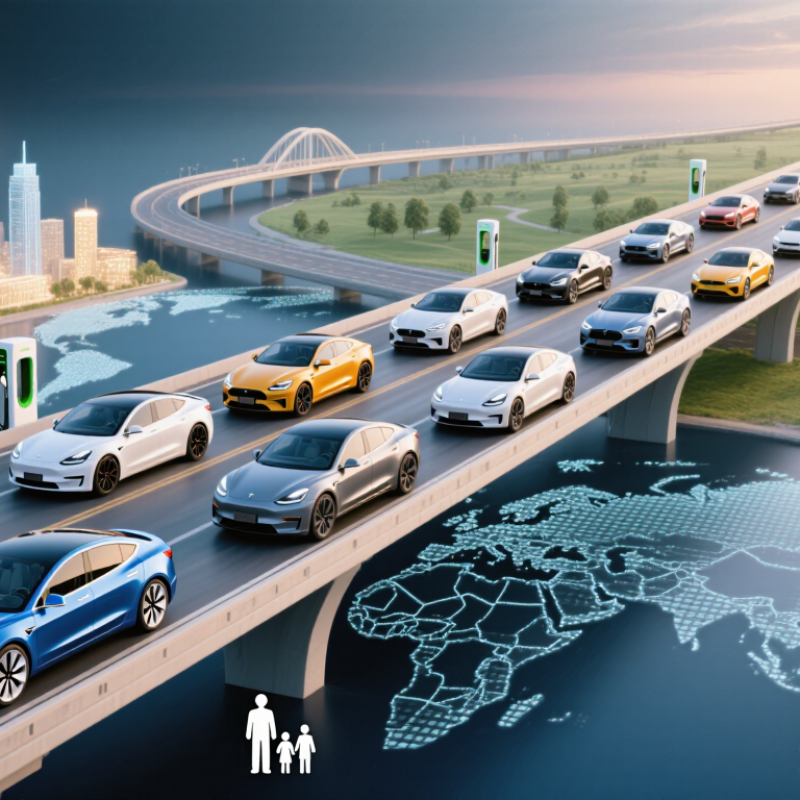
Global Large-EV Market Scope: IEA Reports Over 17 Million Sales in 2024
Top 10 Big Electric Cars for Global Buyers in 2026
Global Large-EV Market Scope: IEA Reports Over 17 Million Sales in 2024
The large-EV conversation now sits inside a much bigger market. The International Energy Agency’s Global EV Outlook 2025 reports over 17 million electric car sales in 2024. Electric cars exceeded one-fifth of global new-car sales. However, the IEA counts all passenger EVs, not only large models. That distinction matters.
For global buyers, a large electric car should offer usable space, stable highway range, and dependable charging. Battery size alone is not enough. A heavy vehicle can lose range quickly in winter, strong wind, or crowded city traffic. The IEA also notes that public charging infrastructure continues expanding, but access remains uneven across regions. Home charging is still a major advantage.
Real-world testing should examine rear-seat legroom, luggage volume, charging from 10% to 80%, and energy use at 110 kilometres per hour. Safety ratings and repair support deserve equal attention. The International Council on Clean Transportation repeatedly highlights efficiency as a key factor in reducing vehicle energy demand. That makes efficient large EVs more convincing than simply powerful ones.
The category remains blurry.
A seven-seat electric vehicle may suit a family, yet its third row can feel cramped. A long-range model may perform well on paper, but cold-weather results can disappoint. Buyers should compare independent tests, local charging prices, warranty terms, and battery degradation data before choosing among the top ten candidates for 2026.
How the Top 10 Are Ranked: Battery, Range, Power, Space, and Price
Top 10 Big Electric Cars for Global Buyers in 2026?
A useful ranking should measure more than impressive acceleration. Battery capacity shows energy reserves, but usable capacity matters more than the advertised figure. Range should be tested under mixed conditions, including cold mornings, highway speeds, and heavy cabin heating. Real results can differ by 20 percent or more. That gap deserves attention.
Power affects merging, towing, and steep roads, yet excessive output may reduce efficiency. Space is equally practical. A strong family choice should fit five adults, carry weekend luggage, and offer a flat rear floor. Price must include charging equipment, maintenance, taxes, and battery warranty coverage. I would score battery and range at 30 percent, power at 15 percent, space at 25 percent, and price at 30 percent. This balance is imperfect, but it reflects everyday ownership better than horsepower alone.
Tips: Compare usable battery size, not only total capacity. Check luggage space with the rear seats raised. Ask about charging speed at 10 percent battery. Read warranty conditions carefully. A low purchase price can hide costly home charging work. I also recommend checking local service access before ordering. A long-range vehicle is less useful when support is several hundred kilometres away. Test the rear seat personally. Measurements sometimes look generous on paper, but children’s seats can change everything.
Range and Charging Benchmarks: EPA, WLTP, CLTC, and 350-kW DC Data
Top 10 Big Electric Cars for Global Buyers in 2026?
Range numbers need careful reading. EPA testing usually gives the most conservative estimate for daily driving. WLTP often reports a higher figure under gentler conditions. CLTC can appear higher still, especially with low-speed city assumptions. These figures are useful, but they are not direct rivals. A large electric car may lose 20–35% of stated range in winter, at motorway speeds, or with heavy passengers. That gap is not a failure. It reflects different testing methods.
Charging claims also need context. A 350-kW DC station does not guarantee 350 kW for every vehicle. The car controls the session, and peak power may last only a few minutes. Battery temperature, charge level, and station sharing matter. A strong family-sized model might charge from 10% to 80% in about 25–35 minutes, but independent tests remain more trustworthy than brochures. Real-world results can still vary.
Tips:
Compare usable battery capacity, not only gross capacity. Check charging speed between 10% and 80%. Look for an efficiency figure near 20–25 kWh per 100 km. Pack a margin for cold weather. A slightly lower range rating may be more credible and easier to live with. Insist on local testing data when possible. The numbers remain imperfect, and buyer expectations should remain flexible.
Safety and Utility: Euro NCAP Ratings, Cargo Volume, and Towing Capacity
Large electric cars are becoming family tools, not simply silent status symbols. The IEA’s Global EV Outlook 2025 reports more than 17 million electric cars sold worldwide in 2024. That growth makes safety and usable space harder to ignore.
Euro NCAP’s 2025 protocols examine adult and child protection, vulnerable road users, post-crash rescue, and driver assistance. A five-star result remains valuable, but ratings from different test years are not perfectly equal. Euro NCAP also warns that safety-assistance performance can vary between versions. Buyers should check the exact vehicle and equipment level. Small details matter, such as clear camera views, predictable lane support, and rear-seat protection. Real life is messier.
Cargo figures need careful reading. The SAE J1100 measurement method supports comparison, yet published volumes may differ by seating position and loading height. A large electric vehicle can offer more than 500 litres behind the second row, while folding those seats can exceed 1,500 litres. Those figures sound impressive. A stroller, charging cable, and two suitcases may still consume most of it. Towing capacity is equally practical. Large electric models commonly list limits from about 1,500 to 2,500 kilograms, depending on market specification. However, towing can reduce range sharply, especially in cold weather or at motorway speeds. The IEA notes that charging access remains uneven across regions, so a high towing limit is not automatically useful. Check the permitted trailer mass, hitch approval, payload, and charging route before trusting the headline number.
Top 10 Big Electric Cars for Global Buyers in 2026? - Safety and Utility: Euro NCAP Ratings, Cargo Volume, and Towing Capacity
| Rank |
Anonymized Vehicle Profile |
Body Style / Seats |
Euro NCAP Overall Rating |
Safety Test Year |
Cargo Behind Rear Seats |
Maximum Cargo Volume |
Maximum Braked Towing |
Utility Highlight |
| 1 |
Large Electric SUV A |
Three-row SUV / 6–7 seats |
★★★★★ 5 stars |
2023 |
333 L |
2,318 L |
2,500 kg |
Best combination of passenger capacity, crash safety, and heavy-trailer capability. |
| 2 |
Large Electric SUV B |
Premium SUV / 5 seats |
★★★★★ 5 stars |
2021 |
500 L |
1,750 L |
2,500 kg |
Exceptional towing rating with a spacious, comfortable cabin. |
| 3 |
Large Electric SUV C |
Luxury SUV / 5 seats |
★★★★★ 5 stars |
2023 |
569 L |
1,637 L |
1,800 kg |
Strong long-distance practicality and a large conventional luggage area. |
| 4 |
Large Electric SUV D |
Premium SUV / 5 seats |
★★★★★ 5 stars |
2023 |
520 L |
1,675 L |
1,800 kg |
Balanced family space, advanced driver assistance, and refined road manners. |
| 5 |
Large Electric SUV E |
Performance SUV / 5 seats |
★★★★★ 5 stars |
2024 |
484 L |
1,411 L |
2,200 kg |
High towing capacity and strong safety performance in a modern electric platform. |
| 6 |
Large Electric SUV F |
Full-size SUV / 5–7 seats |
★★★★★ 5 stars |
2018 |
745 L |
2,487 L |
2,250 kg |
One of the largest cargo areas in the segment, with optional third-row seating. |
| 7 |
Large Electric MPV A |
Electric van / 5–7 seats |
★★★★★ 5 stars |
2022 |
1,121 L |
2,123 L |
1,800 kg |
Outstanding load height, sliding-door access, and family-friendly interior flexibility. |
| 8 |
Large Electric Crossover A |
Crossover SUV / 5 seats |
★★★★★ 5 stars |
2021 |
585 L |
1,710 L |
1,800 kg |
Excellent luggage capacity and a practical square-sided rear compartment. |
| 9 |
Large Electric Crossover B |
Crossover SUV / 5 seats |
★★★★★ 5 stars |
2022 |
466 L |
1,348 L |
1,500 kg |
Useful cargo space, a wide rear opening, and solid family-car practicality. |
| 10 |
Large Electric Crossover C |
Sport crossover / 5 seats |
★★★★★ 5 stars |
2021 |
402 L |
1,420 L |
750 kg |
A strong safety package and generous under-floor storage for everyday use. |
Data notes:
Cargo figures are approximate maximum volumes reported for commonly sold European specifications; values can vary by seating layout, battery version, wheelbase, and market. Towing figures refer to the maximum braked trailer rating for a qualifying configuration. Euro NCAP results are official overall ratings for the tested vehicle versions and test years shown above. Confirm local specifications before purchase.
Regional Buying Guide: CCS, NACS, GB/T, Taxes, and Warranty Rules
Top 10 Big Electric Cars for Global Buyers in 2026?
Large electric cars are becoming easier to compare, but regional charging still decides daily usability. The IEA’s Global EV Outlook 2025 reported more than 17 million electric cars sold worldwide in 2024. Buyers should check whether a vehicle uses CCS, NACS, or GB/T before comparing cabin space. CCS remains common across Europe and many export markets. NACS is expanding across North America. GB/T dominates China’s charging network. Socket shape is only part of the problem. Software access, charging speed, and payment compatibility matter too.
Tax treatment can change the real price dramatically. Import duties, registration fees, purchase taxes, and local incentives may apply differently to a heavy electric vehicle. The OECD notes that vehicle taxation increasingly considers emissions, weight, and road use. A large battery may reduce running costs, yet increase shipping and replacement exposure. Get a written landed-cost estimate. Small print matters. Check battery capacity, usable range, heat-pump equipment, and charging limits in cold weather. Reported range figures can feel optimistic in winter.
Warranty rules also require careful regional reading. In the European Union, consumer law generally provides a minimum two-year legal guarantee, while battery coverage is often longer and mileage-limited. In other markets, terms can differ by importer, battery degradation threshold, and service location. The Global EV Outlook highlights rapid growth in public charging, but access remains uneven between urban and rural areas. Ask who performs high-voltage repairs, how long parts may take, and whether roadside support crosses borders. A familiar connector does not guarantee easy ownership.
Top 10 Big Electric Cars for Global Buyers in 2026
Regional buying guide: range benchmarks, CCS, NACS, GB/T, taxes, and warranty rules
The chart compares ten large electric-vehicle reference configurations by their highest widely published WLTP driving-range figures. Actual range depends on battery size, wheel choice, temperature, speed, software, and local test procedures.
Before buying, confirm the regional charging connector: CCS1 is common in North America, CCS2 is widely used in Europe and many other markets, NACS is expanding across North America, and GB/T is the dominant standard in China. Import duties, VAT or sales tax, registration fees, incentives, and warranty coverage are determined by the destination market and should be checked with the local authority and seller.
FAQS
Battery, range, power, space, and price should all matter. Battery and range deserve practical testing, not only advertised numbers. This balance is imperfect. Everyday needs can change the result.
Usable capacity shows how much energy drivers can actually access. A larger advertised battery may not deliver more daily range. Compare usable figures carefully. Numbers can mislead.
Real range may fall by 20 percent or more. Cold mornings, highway speeds, and cabin heating reduce efficiency. Towing can reduce it further. Winter exposes weaknesses.
Test the rear seat personally. Five adults should fit comfortably, with useful legroom and a flat floor. Bring a child seat during testing. Paper measurements are not enough.
Check luggage space with the rear seats raised. A vehicle may offer over 500 litres behind the second row. A stroller, cable, and two suitcases can fill it quickly. Advertised volume is only part of the story.
Check the exact safety test year and equipment level. Ratings from different years are not perfectly equal. Review child protection, driver assistance, and rescue access. Real traffic is messier.
Listed towing limits often range from 1,500 to 2,500 kilograms. Confirm trailer mass, hitch approval, and payload limits. Towing can sharply reduce range in cold weather. A high limit is not automatically useful.
Charging connectors differ between regions. Software access, payment support, and charging speed matter too. Confirm compatibility before ordering. A familiar socket does not guarantee easy charging.
Include home charging equipment, installation, taxes, maintenance, and warranty coverage. Import duties and registration fees may change the final amount. Get a written landed-cost estimate. The cheap option may not stay cheap.
Check battery coverage, mileage limits, and degradation conditions. Ask who performs high-voltage repairs and how quickly parts arrive. Rural support may be several hundred kilometres away. I would investigate this earlier.
Conclusion
Big Electric Cars are becoming a major part of the global electric-vehicle market, with more than 17 million electric cars sold in 2024. This guide explores the top 10 large electric models for international buyers, ranking them by battery capacity, driving range, performance, interior space, cargo practicality, and price. It also explains how different testing systems can produce varying range figures, helping readers compare EPA, WLTP, and CLTC results more realistically.
Beyond headline specifications, the article examines fast-charging capability, including 350-kW DC charging data, as well as safety scores, towing capacity, and everyday utility. A regional buying guide covers charging standards such as CCS, NACS, and GB/T, along with differences in taxes, import considerations, service coverage, and warranty policies. The goal is to help families, business users, and long-distance drivers choose a spacious electric vehicle that fits their local infrastructure, budget, and practical needs in 2026.
 Worlink
