
Worlink Worlink

What Are the Top EV Car Charger Types in 2026?

Time:2026-11-05 Author:Charlotte
0%

Choosing an Ev Car Charger in 2026 starts with a practical question: where will the vehicle spend most of its time? A home driveway, apartment garage, workplace, and highway stop all call for different charging solutions. The best option depends on more than headline speed. Daily mileage, available electrical capacity, vehicle compatibility, installation costs, and charging habits all matter.

This guide compares the main charger types drivers are likely to encounter: basic Level 1 units, faster Level 2 home and public chargers, and high-powered DC fast chargers. It also looks at portable and smart chargers, which describe useful features rather than entirely separate charging levels. The distinctions can blur. A network-connected Level 2 charger, for example, is still a Level 2 charger.

Real-world performance varies. A vehicle’s onboard charging limit, battery condition, temperature, and the power supply can affect charging time. Connector standards and equipment availability may also differ by region and vehicle model. Check your owner’s manual and charger specifications before buying. For a fixed home installation, have a qualified professional assess the electrical supply and installation needs. Small details matter.

The goal is not to label one charger “best” for everyone. Instead, this overview explains where each type fits, what trade-offs to consider, and which questions to ask before spending money. Some estimates may look neat on paper; everyday charging is less predictable. That is worth remembering.
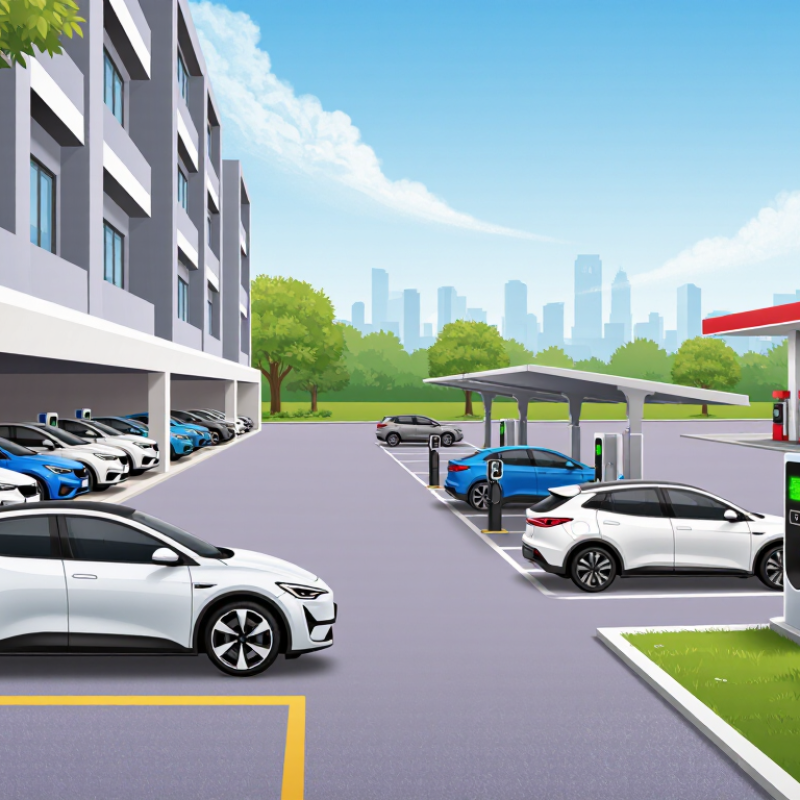
What Are the Top EV Car Charger Types in 2026?

How EV Car Chargers Are Classified in 2026

EV chargers in 2026 are best classified by how they deliver power: AC or DC, charging level, and location. With AC charging, the vehicle converts electricity onboard; DC fast charging sends it to the battery more directly. The U.S. Department of Energy’s Alternative Fuels Data Center describes Level 1 as standard household-voltage charging and Level 2 as higher-voltage AC charging. DC fast charging is a separate category. These labels describe charging capability, not connector shape or compatibility.

The International Energy Agency’s Global EV Outlook 2024 reported nearly four million public charging points worldwide at the end of 2023. Public fast-charger installations grew by about 55% that year. Those figures show why “charger type” can mean different things: power level, AC/DC method, or public versus private access. That distinction matters. A high-power unit may still deliver less in practice if the vehicle, battery temperature, or site capacity limits charging speed. Classification helps, but it cannot promise a specific charging time.

Tips: Check your vehicle’s maximum AC and DC input rates before comparing chargers. For home use, note the circuit and cable reach; for road trips, look for DC output and working status. Connector details matter too. They’re easy to overlook.

Level 1 AC Chargers: Basic Home Charging

Level 1 AC charging uses a standard 120-volt household outlet, making it the simplest home setup for many drivers. The U.S. Department of Energy’s Alternative Fuels Data Center estimates it adds about 2–5 miles of driving range per hour. Over a ten-hour night, that is roughly 20–50 miles, though vehicle efficiency and conditions change the result. It suits short daily trips or plug-in hybrids better than a long commute. Slow, but useful.

Tips: Park close to the outlet, inspect the cable, and avoid extension cords. Check your vehicle manual and have a qualified electrician assess the outlet if it feels warm or looks worn.

The U.S. Department of Energy’s home-charging guidance also describes Level 1 as a basic option for overnight charging. Cold weather, battery heating, and charging losses can reduce the range gained, so the estimate is not a promise. A driver arriving home with a nearly empty battery may need more time than one night provides. That limitation is easy to overlook.

Level 2 AC Chargers: Faster Home and Public Charging

Level 2 AC chargers use a higher-voltage supply than standard household outlets, commonly 208 to 240 volts. They can add useful range during an overnight stop, though the actual rate depends on the vehicle’s onboard charger, circuit capacity, and battery conditions. More power is not always more speed. A car may accept less than the charger can provide. At home, a qualified electrician can check whether the existing wiring and electrical panel can support installation. That check matters.

Public Level 2 chargers suit workplaces, parking garages, and shopping areas where cars stay parked for a while. They generally charge more slowly than DC fast chargers, but can be convenient during a two-hour errand or work shift. Availability and charging costs vary by location, so check access and payment details before relying on a station. A blocked cable or occupied space can disrupt plans, too.

Tips: Match the charger’s output to your car’s maximum AC charging rate, and confirm connector compatibility. For home use, choose a location close enough for the cable to reach without stretching across a walkway. Keep the connector dry and inspect cables for visible damage. If charging seems unusually slow, check the vehicle settings and temperature before assuming the charger is faulty. Small details matter.

What Are the Top EV Car Charger Types in 2026? — Level 2 AC Chargers: Faster Home and Public Charging

Level 2 Setup Typical Supply Approx. Charging Power Illustrative Range Added per Hour Common Use Key Consideration
Portable Level 2 charger 208–240 V AC About 3.3–7.7 kW About 9–21 miles (14–34 km) Home charging or travel where a compatible outlet is available Charging speed depends on the outlet, circuit rating, charger settings, and the vehicle’s onboard charger.
Residential wall-mounted charger Typically 208–240 V AC Commonly 7.2–11.5 kW About 19–31 miles (31–50 km) Overnight charging at a house or garage A qualified electrician should confirm the circuit capacity and installation requirements.
Higher-power home Level 2 setup Typically 240 V AC Up to about 19.2 kW where supported About 52 miles (84 km) Homes with suitable electrical service and vehicles that can accept higher AC power Many vehicles cannot use the full output; the vehicle’s onboard AC charger sets the effective maximum.
Public Level 2 charging station Commonly 208–240 V AC Often about 6–19.2 kW About 16–52 miles (26–84 km) Workplaces, parking facilities, hotels, and destinations Actual power may be shared between vehicles or limited by the station, site electrical supply, or vehicle.
Shared or managed Level 2 charging 208–240 V AC Varies; output may be dynamically adjusted Varies with allocated power and charging time Apartment buildings, fleets, and multi-space parking areas Load management can distribute available electrical capacity across several charging vehicles.

Range figures are illustrative estimates based on approximately 3 miles (4.8 km) of driving per kWh and 90% charging efficiency. Actual results vary with vehicle efficiency, temperature, charging losses, battery condition, and the vehicle’s AC charging limit. Level 2 charging uses AC power; charging speed is ultimately constrained by the lowest-capacity part of the vehicle, charger, and electrical installation.

DC Fast Chargers: High-Speed Charging on the Road

On a highway trip, a DC fast charger can turn a low battery into a useful pause instead of an overnight stop. It converts grid power to direct current outside the vehicle, bypassing the car’s onboard AC charger. The U.S. Department of Energy’s Alternative Fuels Data Center describes DC fast charging equipment from about 50 kW upward, with some units rated at 350 kW. Actual speed depends on the vehicle, battery temperature, and charge level. Speed has limits. Power usually tapers as the battery fills, so a 350-kW rating does not mean constant peak charging.

The International Energy Agency’s Global EV Outlook 2024 reported more than one million public fast-charging points worldwide at the end of 2023, following 55% growth that year. That expansion makes longer journeys easier, but a charger’s location and reliability matter as much as its headline power. A cold battery, a short queue, or a heavy cable can change the stop. Allow roughly 20 to 60 minutes for a useful charge, while checking the vehicle’s charging curve and nearby options before setting out. The estimate is imperfect; real trips rarely follow a neat chart.

What Are the Top EV Car Charger Types in 2026? — DC Fast Chargers: High-Speed Charging on the Road

Estimated time to charge a 60 kWh battery from 10% to 80%, assuming the charger delivers its full rated power continuously. Actual times vary by vehicle, battery temperature, charger output, and the battery’s charging curve.

Comparing Charger Types by Speed, Cost, and Use Case

In 2026, home EV charging usually comes down to Level 1 or Level 2 equipment. Level 1 uses a standard household outlet and often adds only a few miles of range per hour. It costs little to start, but a nearly empty battery may need days to refill. Slow, but workable. It suits drivers with short daily trips and a long overnight parking window.

Level 2 uses a 240-volt circuit and can replenish a typical car much faster, though actual speed depends on the vehicle and electrical setup. Installation costs vary: a nearby panel may keep the job simple, while a long cable run or panel upgrade can raise the bill. The wall unit is only part of the cost. For many households, Level 2 balances overnight convenience with manageable energy use. Still, I’d check the panel before buying; that step is easy to overlook.

DC fast chargers are built for quick stops, not most home garages. They can add substantial range in roughly 20 to 40 minutes, but charging time varies with battery temperature, vehicle limits, and starting charge. Public session prices also vary by location and pricing method. They make sense on road trips or for drivers without reliable home charging. Frequent fast charging may cost more, and speed often tapers as the battery fills. A charger’s headline rate is not always the rate your car receives.

FAQS

How are EV chargers classified in 2026?

They are grouped by power delivery, charging level, and location. AC chargers let the car convert electricity onboard. DC chargers send power more directly to the battery.

What does Level 1 charging provide?

It uses a standard 120-volt household outlet and may add about 2–5 miles of range per hour. Slow, but useful. A ten-hour night might add 20–50 miles.

When is Level 1 charging a practical choice?

It can suit short daily trips, plug-in hybrids, or cars parked overnight. A nearly empty battery may need more than one night. That detail is easy to miss.

How does Level 2 charging differ?

Level 2 uses a 240-volt circuit and usually charges faster than Level 1. Actual speed depends on the car and home electrical setup.

What can affect the cost of installing Level 2 equipment?

A nearby electrical panel may make installation simpler. A long cable run or panel upgrade can raise the cost. Check the panel before buying; I might overlook that myself.

What are DC fast chargers best used for?

They are designed for quick stops, such as road trips. A session may take roughly 20–40 minutes, but charging speed varies. Not a guaranteed timer.

Why might a charger deliver less power than its listed rate?

The car’s charging limits, battery temperature, starting charge, and site capacity can all matter. Power often tapers as the battery fills.

What should drivers check before choosing a charger?

Check the car’s maximum AC and DC input rates. At home, measure cable reach and inspect the outlet. For travel, check the charger’s output and working status.

Conclusion

In 2026, EV car chargers are commonly classified by their power source, charging speed, and intended setting. Level 1 AC chargers use a standard household outlet and offer the slowest charging, making them suitable for overnight use or drivers with short daily trips. Level 2 AC chargers deliver power more quickly and are a practical choice for home installations, workplaces, and public parking areas where vehicles can remain parked for several hours.

DC fast chargers provide high-speed charging for longer journeys and busy travel routes, helping drivers add range during a shorter stop. Their charging performance and cost can vary depending on the charger’s power and the vehicle’s capabilities. Choosing an Ev Car Charger therefore means balancing speed, installation or access costs, and everyday needs: Level 1 favors simplicity, Level 2 offers a versatile middle ground, and DC fast charging is best suited to time-sensitive road travel.

Charlotte

Charlotte

Charlotte is a seasoned marketing professional with a deep understanding of the company's portfolio and a passion for elevating its presence in the market. With a keen eye for detail and a commitment to excellence, she ensures that our professional blog is regularly updated with insightful articles......